
Introduction
Across cultures, religions, and generations, the belief in the evil eye—commonly known as Nazar—has endured as one of humanity’s oldest explanations for sudden misfortune, unexplained negativity, or disrupted happiness. From India and the Middle East to Europe, Africa, and Latin America, people continue to believe that excessive admiration, envy, or ill intent can negatively affect a person’s health, success, or peace of mind.
But why has this belief survived for thousands of years? Is it rooted in spirituality, psychology, culture, or lived experience? Understanding why people believe in the evil eye reveals much about human emotions, social behavior, and the universal need for protection and balance.
The Historical Origins of the Evil Eye Belief

The concept of the evil eye dates back over 5,000 years, appearing in ancient civilizations such as Mesopotamia, Egypt, Greece, and Rome. Early societies believed that envy and jealousy carried powerful energy, capable of causing harm even without physical contact.
Ancient texts and symbols suggest that people feared the gaze of others, especially those who admired wealth, beauty, or success too intensely. In times when science could not explain illness, crop failure, or sudden loss, the evil eye became a way to understand and cope with uncertainty. Over time, this belief was passed down through oral traditions, rituals, and religious teachings.
The Role of Envy and Human Emotion
At the heart of the evil eye belief lies a very human emotion: envy. Across cultures, it is widely believed that strong feelings of jealousy—whether intentional or unintentional—can disrupt another person’s well-being.
People believe in Nazar because they observe patterns: success followed by setbacks, happiness followed by unexplained problems. When someone openly praises achievements or beauty, it is thought that the energy behind that admiration may not always be pure. The evil eye belief acts as a caution against excessive display of success, encouraging humility and emotional balance in social interactions.
Cultural Conditioning and Generational Influence
Belief in the evil eye often takes root at a very early age because it is woven into everyday family life rather than taught as a formal belief system. Children grow up observing elders perform nazar utarna rituals, apply black dots behind the ear, tie protective threads, hang lemons and chillies, or quietly recite prayers when something good happens. These actions are rarely explained in detail; instead, they are presented as “things we do to stay safe,” which makes them feel natural and unquestionable.
Over time, repetition plays a powerful role. When children repeatedly witness these practices during emotionally significant moments—such as childbirth, weddings, exams, illnesses, or the purchase of a new home—the association between protection and ritual becomes stronger. These are moments of vulnerability and transition, and the presence of rituals provides comfort, reassurance, and a sense of control. As a result, the belief is not just learned intellectually; it is emotionally absorbed.
As generations pass, the evil eye shifts from being viewed as superstition to being regarded as cultural wisdom. Elders often frame it as precaution rather than fear—something done “just in case,” much like locking doors or saying a prayer before travel. Questioning it may even feel disrespectful to tradition, ancestors, or family values. This is how the belief sustains itself: not through strict enforcement, but through gentle, consistent cultural reinforcement.
In this way, belief in the evil eye becomes less about fear of harm and more about continuity, identity, and emotional security. It survives because it offers people a sense of protection during life’s uncertain moments—and when something feels comforting and familiar, it naturally gets passed on.
The Psychological Need for Explanation and Control
Human beings have an innate tendency to look for meaning, especially when faced with sudden setbacks or unexplained misfortune. When things go wrong without an obvious reason—such as a sudden illness, financial loss, relationship strain, or repeated failures—it can feel deeply unsettling. The idea of the evil eye steps in as a narrative that helps make sense of chaos. Instead of accepting events as random or unjust, people are given an explanation that feels emotionally satisfying and culturally familiar.
Belief in nazar also plays a powerful psychological role. It protects self-esteem by shifting blame away from personal inadequacy or bad decisions. Rather than internalizing guilt or feeling cursed by fate, individuals can attribute the setback to external negative energy. This reframing reduces emotional distress and helps people cope without spiraling into self-doubt or fear.
Perhaps most importantly, the evil eye restores a sense of control in situations where people feel powerless. Rituals like nazar utarna, wearing protective charms, applying black dots, or reciting prayers create an active response to misfortune. Even if the outcome doesn’t immediately change, the act of doing something provides relief. These practices reduce anxiety, replace helplessness with action, and offer emotional grounding during uncertain times.
In this way, belief in the evil eye is less about fear and more about emotional regulation. It gives people closure when logic falls short, comfort when outcomes feel unfair, and a sense of agency when life feels unpredictable. That psychological reassurance is one of the strongest reasons the belief continues to endure across cultures and generations.
Religion and Spiritual Beliefs
Many religions acknowledge the concept of negative influence through intention or gaze. References to the evil eye exist in Hinduism, Islam, Christianity, Judaism, and Buddhism, reinforcing its legitimacy among believers.
In spiritual traditions, thoughts and intentions are considered powerful forces. The evil eye belief aligns with the idea that energy—positive or negative—can influence outcomes. For believers, Nazar is not superstition but a spiritual truth, managed through faith, prayer, and protective practices.
Social Behavior and Fear of Visibility
Another reason people believe in the evil eye is the fear of being too visible. In many societies, standing out—whether due to wealth, beauty, intelligence, or success—is believed to attract unwanted attention.
This belief encourages modesty and discretion. People avoid oversharing achievements or happiness, especially publicly, to protect themselves from negative energy. In this way, the evil eye belief also functions as a social regulator, promoting humility and balance.
Real-Life Experiences Reinforce Belief
Many believers point to personal experiences where something went wrong shortly after receiving praise or attention. Whether coincidence or perception, these experiences reinforce faith in the evil eye.
When multiple people share similar stories—especially within families or communities—the belief strengthens. Over time, anecdotal evidence becomes collective truth, making Nazar feel real, personal, and undeniable.
The Modern Perspective: Energy, Mindset, and Awareness
In modern times, belief in the evil eye has evolved rather than disappeared. Some view it through the lens of energy psychology, emotional sensitivity, or stress response. Excessive attention, comparison, or envy can trigger anxiety, pressure, or emotional imbalance—leading to real consequences.
From this perspective, Nazar represents the impact of social energy on mental and emotional well-being, rather than a literal curse. Even skeptics acknowledge that protecting one’s peace, limiting negativity, and maintaining boundaries are practical outcomes of this belief.
Why the Evil Eye Belief Still Exists Today
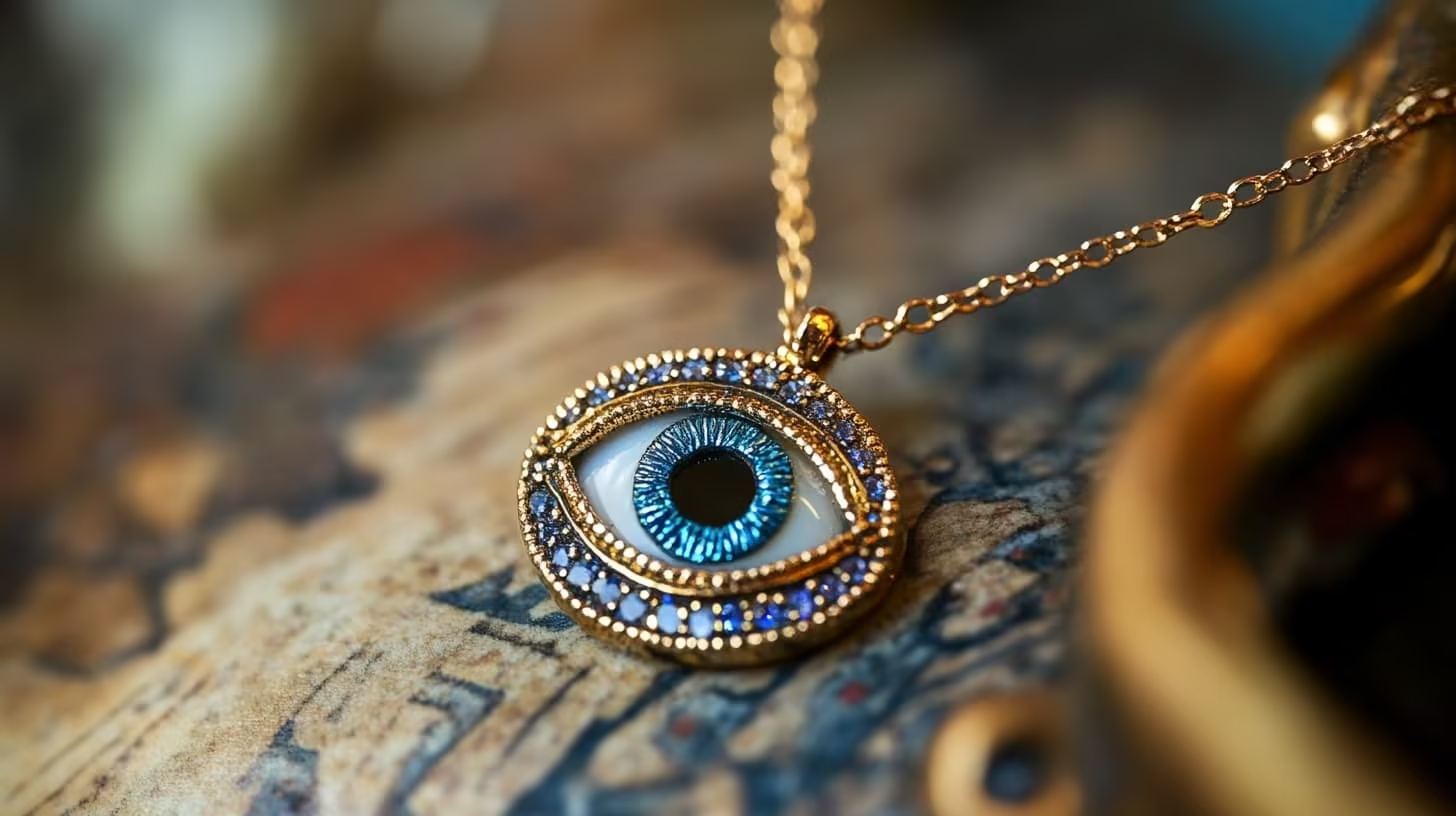
Despite scientific progress, belief in the evil eye persists because it fulfills multiple needs at once—cultural continuity, emotional protection, spiritual reassurance, and psychological comfort. It adapts to modern life, appearing in jewelry, symbols, mindfulness practices, and even social media behavior.
At its core, the evil eye belief reflects a universal truth: human connections are powerful, and not all attention is harmless. Whether viewed spiritually or symbolically, Nazar continues to resonate because it addresses real emotional experiences in a complex social world.
Also Read: How to Start the New Year Without Big Resolutions
Final Thoughts
People believe in the evil eye not because of fear alone, but because of history, culture, emotion, and lived experience. It is a belief shaped by centuries of observation, passed down as a form of protection and awareness.
Whether one interprets Nazar as spiritual energy, psychological influence, or cultural symbolism, its enduring presence reminds us of the importance of balance, humility, and mindful interaction in our lives.